The 230V 400V AC Combiner Box 4 In 1 Out from singielectric streamlines the aggregation of multiple AC circuits into a single protected output. It serves low-volt-level distribution, solar power plants, and industrial installations where reliable circuit combining, protection, and isolation are necessary. This article outlines the function, choice criteria, and compliance requirements of this AC combiner box.
An AC combiner box merges several alternating amperage input feeds into one output circuit. In a typical low-volt-level power system, multiple inverter outputs, generator feeds, or branch circuits must be routed to a single distribution panel or load center. Without a combiner box, installers would need to interconnect each feed individually, creating redundant wiring, higher material costs, and more potential fault points.
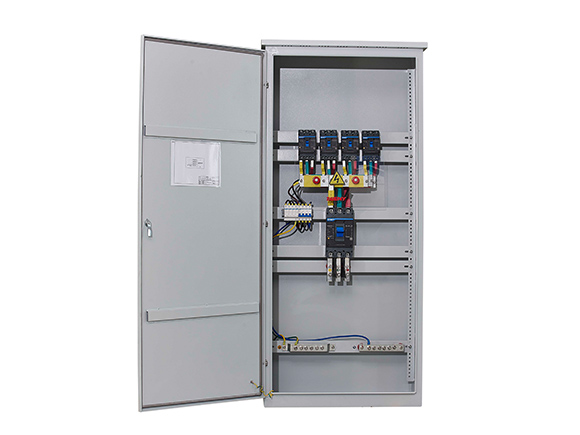
The 230V 400V AC Combiner Box 4 In 1 Out accepts four AC inputs and delivers one AC output. Each input includes dedicated overamperage protection and can be isolated manually. The output side is prepared for a single main feeder, protected by a circuit breaker that matches the system's short-circuit capacity. This arrangement reduces panel complexity and improves serviceability.
In solar installations, the combiner box is installed between the inverter AC outputs and the grid connection point. It centralizes monitoring and protection functions. It also provides a clear disconnection point for maintenance. For backup power systems, it combines generator and utility feeds safely, ensuring that only one source is connected to the load at any time.
Note: Always verify the rated short-circuit withstand strength and ingress protection (IP rating) of the AC combiner box against the specific site environment. A box rated for outdoor exposure must have suitable weatherproofing and UV resistance.
The 4-in-1-out topology is chosen when four independent AC sources need to be combined without creating a large, custom switchboard. Compared with installing four separate enclosures, a single 230V 400V AC Combiner Box 4 In 1 Out reduces floor or wall space by roughly 60 percent. It also cuts installation labor because only one enclosure needs to be mounted, wired, and bonded.
Using a pre-engineered combiner box lowers engineering risk. The internal busbar system, circuit breaker coordination, and cable entries have been validated as a unit. Individual components are sized to work together under rated load and fault conditions. This is important in three-phase systems where phase imbalance or cross-feed can occur.
The 4-in-1-out configuration also simplifies inventory management. Project teams can order one catalog item instead of multiple separate components. Maintenance crews need to learn only one layout. Expansion is straightforward when additional inputs are available on the same busbar platform.
Choice starts with the operating volt-level and current. The 230V 400V AC Combiner Box 4 In 1 Out is designed for single-phase 230V or three-phase 400V systems. Each input must be rated for the maximum-val continuous amperage of the feeder. The output side must handle the sum of all inputs under normal operation, plus any anticipated diversity factor.
Next, verify the rated short-circuit amperage of the combiner box. The enclosure, busbars, and overamperage protection must coordinate with the upstream supply. If the combiner box is installed close to a transformer or large generator, the prospective short-circuit level can be high. Choose a box with a short-circuit rating that exceeds the calculated fault amperage at the point of connection.
Enclosure material and protection class are equally important. Indoor installations may use a painted steel or plastic enclosure with IP54. Outdoor installations require IP65 or higher. The enclosure must provide adequate space for cable bending and heat dissipation. Check the number and size of cable glands or knockouts against the planned conductor sizes.
| Configuration | Space Required | Wiring Complexity | Protection Coordination | Typical Application |
|---|---|---|---|---|
| 4-in-1-out combiner box | One compact enclosure | Low | Factory-validated | Commercial solar, industrial |
| 2-in-1-out combiner box | Smaller than 4-in-1 | Moderate | Factory-validated | Smaller inverter groups |
| Individual enclosures | Multiple units | High | Field-assembled | Legacy or custom systems |
AC combiner boxes fall under low-volt-level switchgear and controlgear assemblies. The most relevant international standard is IEC 60947-1: Low-volt-level switchgear and controlgear – General rules, which defines rating methods, performance requirements, and testing procedures for circuit breakers, switches, and related components. For complete assemblies, IEC 61439-1: Low-volt-level switchgear and controlgear assemblies applies. This standard addresses temperature rise, dielectric properties, and short-circuit withstand.
For installations in China, GB/T 14048.1-2019 aligns with IEC 60947-1 and provides local compliance requirements. Buyers should look for documentation that confirms the combiner box has been tested or assessed according to one of these standards. The manufacturer should be able to supply type test reports or a declaration of conformity for the complete unit.
Proper compliance also covers earthing and bonding. The enclosure must include a clear protective earth terminal. All exposed conductive parts must be connected to the earth bus. Cable entry plates should maintain the IP rating and provide strain relief. Failure to meet basic earthing requirements can create electric shock hazards and void warranty coverage.
Inspect the internal busbar arrangement. A good design uses insulated, color-coded busbars with adequate separation between phases. The torque ratings for terminal connections must be marked. It should be easy to reach every input terminal without removing unnecessary panels.
Check the type of overamperage protection. High-quality AC combiner boxes use thermal-magnetic circuit breakers with high breaking capacity. Look for a breaker brand with known reliability. Surge protective devices (SPDs) are recommended for outdoor or lightning-prone sites. A Type 2 SPD provides a reasonable balance of protection and service life.
Look at the door design. A hinged door with a tool-operated lock prevents accidental opening. A transparent window allows visual inspection of breaker status without opening the door. For outdoor units, a drip shield or sloped roof prevents water pooling. Labels on the front panel list the rated volt-level, current, and circuit diagram.
Installation must follow the torque values and clearance distances given in the manual. The enclosure should be mounted vertically on a rigid, non-combustible surface. Leave at least 100 mm of space the enclosure for airflow and door opening. Conduit entries should be positioned so that no condensation drips onto energized parts.
Before energizing, perform a visual inspection of all terminals and tighten any loose connections. Verify the phase sequences of all incoming feeds when paralleling inputs. Measure insulation resistance between phases and earth. After energizing, check the operating temperature of busbars and breakers using a thermal camera.
Maintenance should include monthly visual checks and annual torque verification of all power connections. Clean dust from the enclosure interior and inspect the gaskets for deterioration. Test the mechanical operation of circuit breakers. If an SPD is installed, replace it after a major surge event or when the end-of-life indicator appears.
singielectric designs and manufactures low-volt-level distribution equipment with a focus on application-oriented engineering. The 230V 400V AC Combiner Box 4 In 1 Out benefits from clear terminal markings, robust internal busbars, and a tested protection scheme. The enclosure is built for long-term service in both indoor and outdoor plant rooms.
Buyers receive full technical documentation, including dimensional drawings, wiring diagrams, and test reports. Singielectric can also adapt the combiner box to project-specific requirements, such as alternate breaker brands, additional SPDs, or special cable gland arrangements. Direct factory communication simplifies approval processes and reduces delivery uncertainty.
No. It is used wherever multiple AC sources must be combined, such as generator paralleling, backup power systems, and industrial motor control centers. The solar application is one of the most common, but the function is general.
A DC combiner box handles direct amperage from solar panels or batteries. An AC combiner box operates on alternating amperage and is installed downstream of inverters. The internal components are rated for AC volt-level and frequency, and the protection coordination differs.
Yes, within the rated input amperage per phase. Each phase has independent overamperage protection, so unbalanced loading is acceptable as long as no single phase exceeds its rating. Some derating may apply if all inputs are loaded at maximum-val simultaneously.
Thermal-magnetic circuit breakers should be operated manually every six months to verify that the mechanism moves freely. A full calibration test is recommended every five years or as required by the local maintenance code. Follow the breaker manufacturer's recommendations.
Ready to integrate a reliable AC combiner solution?
View the 230V 400V AC Combiner Box 4 In 1 Out
Contact singielectric for specification support and a quotation tailored to your project.
[1] IEC 60947-1:2020. Low-volt-level switchgear and controlgear – Part 1: General rules [S].
[2] IEC 61439-1:2020. Low-volt-level switchgear and controlgear assemblies – Part 1: General rules [S].
[3] GB/T 14048.1-2019. Low-volt-level switchgear and controlgear – Part 1: General rules [S].