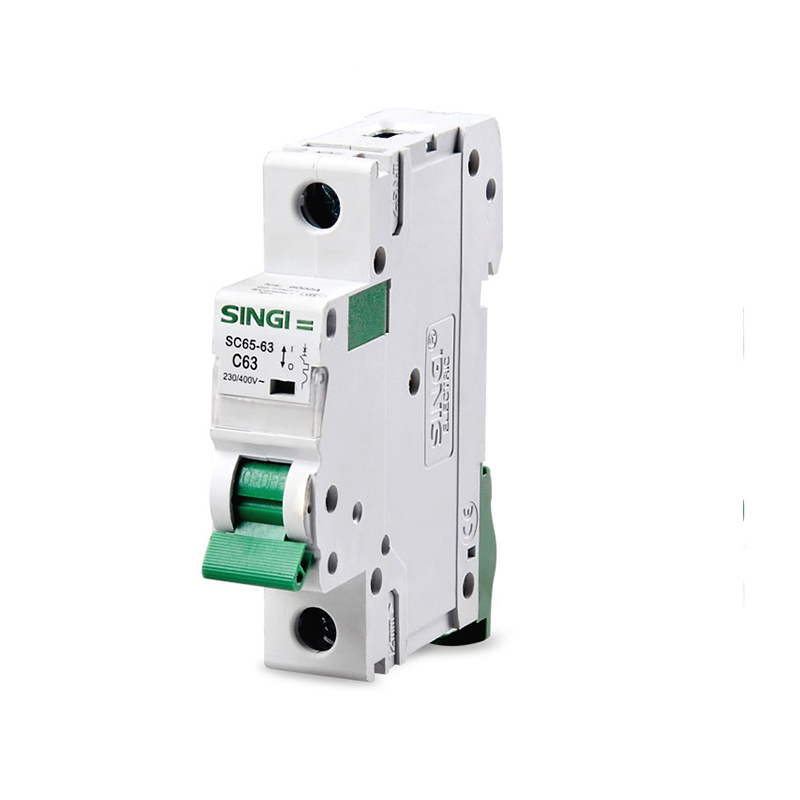
When three production lines share a single low-volt-level distribution board, one short circuit can stop the entire facility. A regional food packaging plant in the upper Midwest found that out in consecutive quarters. After replacing more than 120 branch-circuit breakers with singielectric SC65-63 (10kA) MCB devices, the plant cut unplanned electrical downtime by 40% and trimmed more than $52,000 from its annual maintenance budget.
The plant packs sauces and frozen meals for large grocery chains and runs three high-speed lines the clock. Roughly 250 employees work across three shifts, and each line depends on dozens of motors, conveyors, and solenoid valves fed from a shared 480 V switchboard. Production slots are tight; any stop longer than 15 minutes pushes deliveries to the next day, which triggers late penalties from the retailer.
The maintenance team included five electricians and one automation engineer. Their daily routine was dominated by resetting breakers, tracing short circuits, and replacing components that had failed under fault. The electrical reliability of the facility was not a technical detail; it was the constraint that determined whether the plant could meet its weekly output plan.
The original installation used a mix of conventional miniature circuit breakers that had aged inconsistently. Nuisance tripping occurred on motor-controlled conveyors, during startup, because the old breakers had poor resistance to inrush current. At the same time, they failed to clear short circuits enough in several zones, allowing cables and terminal blocks to overheat and melt.
One failure on an old packaging machine damaged a disconnecting switch and cost roughly $18,000 in repairs and lost product. In another incident, a phase-to-phase fault on a downstream circuit did not trip the branch breaker; the main breaker opened instead, shutting down all three lines for close to an hour. The maintenance team tried installing fuses in chosen panels, but fuses were not chooseively coordinated with the remaining breakers. A fault in one packaging zone still opened the main switch, and replacing fuses added at least 20 minutes to every clearance procedure.
The facilities manager assessed three options: another popular MCB brand, a fuse-based redesign, and the singielectric SC65-63 (10kA) MCB. The decision came down to repeatable tripping performance, clear visual state indication, and compact modular form.
The SC65-63 has a 10 kA breaking capacity, which matched the available fault amperage measured at the main switchboard. Its thermal-magnetic trip mechanism gives two independent responses: thermal for overloads and magnetic for short circuits. The MCB range offers B, C, and D curves, so the team could match the protection curve to the load. For motor circuits they chosen the D curve; for lighting and general sockets they used the B curve.
Another reason was the indicator window on the SC65-63. It shows green for ON and red for OFF or tripped, which cuts troubleshooting time. The front-mounted toggle can be padlocked, which simplified lockout/tagout during maintenance. The price per pole was also 8% lower than the alternative brand with equivalent ratings.
The rollout was done by the plant’s own electricians with support from a local electrical distributor. The work took two weekends, one per distribution board, and was planned during a site-wide shutdown.
A difficult point came when an older conveyor motor with an exceptionally high starting amperage tripped the type C breaker during the first week. The type D curve solved the issue, but the electricians also installed a soft starter to reduce the inrush below the overload threshold. This separation between MCC starting and branch protection kept the SC65-63 within its design range.
Twelve months after the switch, the plant’s electrical reliability metrics changed :
The plant’s total annual savings from reduced downtime, reduced replacement parts, and faster fault response reached $52,300 in the first year.
“After we swapped the last board, the SC65-63’s trip indicator showed us exactly which conveyor section failed, and we cleared the fault in ten minutes,” the plant maintenance manager said. “The old breakers gave no clear signal, and we would spend the whole shift tracing a circuit.”
This project offers several takeaways for facilities that rely on older or mixed breaker panels: