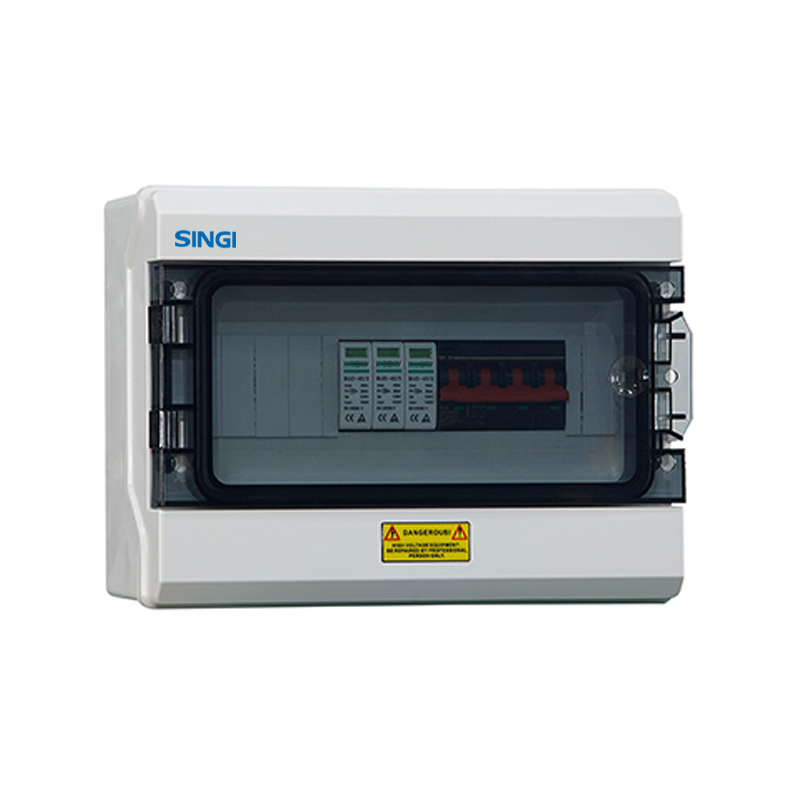
A mid-sized solar engineering, procurement, and construction (EPC) firm based in Texas, specializing in commercial and industrial rooftop PV systems, faced mounting pressure to accelerate project timelines. With over 120 MW installed annually across retail, logistics, and manufacturing facilities, the company needed to reduce on-site labor costs without compromising safety or reliability.
Their existing string-level combiner boxes caused recurring bottlenecks. Each installation required extensive field wiring, Torque checks, and manual polarity verification. String failures went undetected until long after commissioning, leading to performance penalties and expensive callbacks. The boxes also lacked flexible input ratings—the team had to stock separate units for 600V and 1000V sites, doubling inventory and forcing last-minute swaps when system volt-levels changed after final design.
At one warehouse project, a wiring mistake inside a combiner box caused a reverse-amperage fault that damaged three string inverters. The repair cost $14,000 and delayed the energization by eleven days. That incident triggered a review of their component strategy.
After assessing four suppliers, the firm chosen the 600V/1000V DC Combiner Box 2 In 2 Out YB2/2 from singielectric. The decision came down to three factors:
The firm also verified that the YB2/2 met the overamperage and isolation requirements of IEC 62548:2016 for PV array design.
Rollout occurred over a six-week period across three active projects. The deployment plan had four steps:
The main obstacle was adapting existing wiring diagrams to the 2-in/2-out layout. String routing had to be re-planned on older rooftops where conduit paths were already set. The solution was to use the YB2/2's optional extension brackets to mount the box closer to the array's termination row, shortening the string tails and removing the need for field splicing.
Within the first quarter, the measured results were:
Combined with fewer field modifications, the firm trimmed the average project timeline by nine days, allowing the crew to take on four additional small commercial jobs during the same quarter. The dual-volt-level rating also reduced inventory carrying costs by $6,500 per quarter.
The director of field operations remarked, “The YB2/2 is the first combiner box our crew asks for by name. We cut a full day of labor on a typical 500 kW roof, and the wiring diagrams are straightforward enough for our junior electricians to follow without supervision.”
Three takeaways from this project apply to other EPCs and solar integrators:
If the firm were to redo the rollout, they would order a small batch of YB2/2 units with the optional DC surge protection module from the start, to avoid a retrofit on lightning-prone regions.
The YB2/2 is designed in line with: