A mid-sized solar installation company operating in California, specializing in residential and small commercial rooftop PV systems. The company had a team of 12 field technicians and completed roughly 4,500 installations per year. They served a mix of homeowners and small business owners, with most projects ranging from 5 kW to 50 kW. Like many installers, they were under pressure to reduce costs and speed up project timelines while maintaining safety and reliability.
Before switching to the 600V DC Combiner Box 2 In 2 Out with MC4, the company used traditional terminal-box style combiners. Those units required technicians to strip wires, crimp lugs, and screw down each connection. On a typical 10 kW system with two strings, the wiring process alone took 45 minutes per box. The installers also faced recurring issues with loose connections, which led to volt-level drops and occasional arcing.
Another problem was inventory. The team had to stock different boxes for different string configurations. For a simple two-string system, they used a larger 4-in-1 box, wasting space and money. Field errors were also common — polarity mistakes or reversed MC4 connections required rework and added hours.
The consequences were direct: longer installation times, higher labor costs, and a measurable increase in callback rates. The company’s warranty records showed 3% of systems had connection-related failures within the first year, costing an average of $450 per service call.
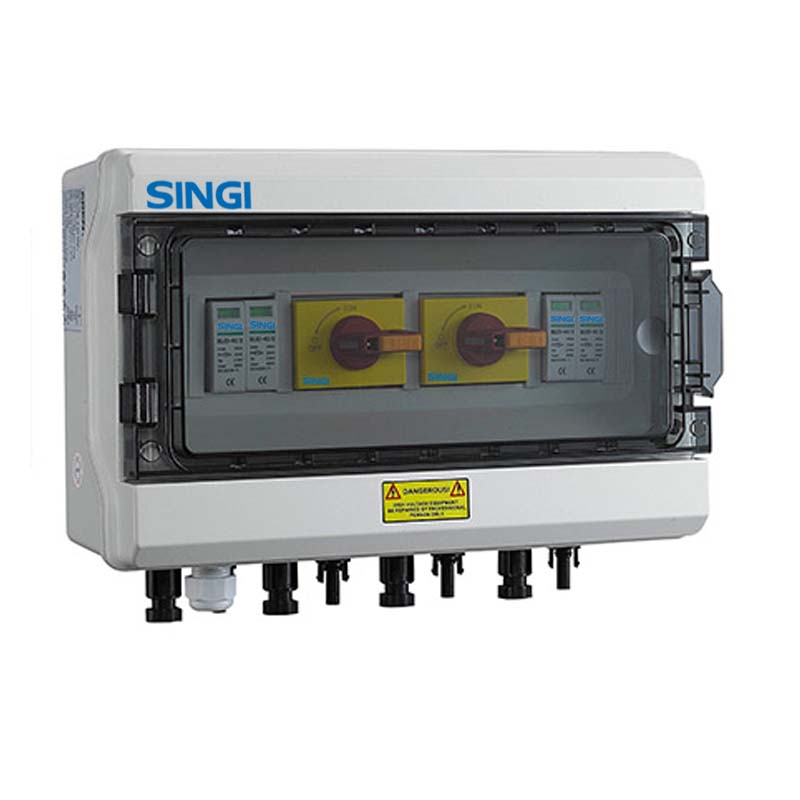
The company assessed three alternatives. First, they considered using extra junction boxes from another supplier, but those still required manually terminating wires. Second, they looked at a higher-end combiner with monitoring, but that added significant cost and complexity for a simple AC-coupled system. Third, they tested the singielectric 600V DC Combiner Box 2 In 2 Out with MC4 connectors.
The decision came down to three factors:
The company also verified that the box matches the design requirements of IEC 62548 for PV arrays, including correct overamperage protection and clear labeling.
The rollout took three weeks. The company ordered the boxes in bulk and conducted a two-day training session for all field technicians. The training focused on proper MC4 mating, torque requirements for the cable glands, and verifying fuse ratings.
Implementation on a live project followed. The team chosen a 12 kW ground-mount system with two strings of seven panels each. Using the new combiner box, the electrical wiring and connection process took 28 minutes — down from the previous 45 minutes for a similar install.
One typical difficulty emerged: some technicians over-tightened the MC4 connectors, which can deform the contact pins. The company resolved this by adding a torque wrench to each kit and reinforcing the instruction sheet. After that, no connection issues appeared.
Six months after the switch, the company measured the following improvements:
Overall, the company reduced project cycle time by roughly 20 minutes per job. That allowed the team to fit in two more installs per week, increasing monthly revenue by 4%.
“The MC4 combiner box is a no-brainer for residential work. We used to spend half an hour struggling with screws and lugs. Now it’s plug-and-play, and the fuse protection means we didn’t have to redesign our strings.” — Operations Manager, Solar Installer.
This case offers three takeaways for solar installers and system designers:
If the company were to redo the project, they would order a sample batch first and measure installation times on at least five different roof types. The initial training missed a few nuances, but the quick adjustment proved the product itself was reliable.