A mid-sized packaging manufacturer in Vietnam’s Binh Duong province runs a 300 kW rooftop solar installation to power its extrusion lines and cooling systems. The facility’s electrical team manages four 30 kW three-phase inverters, each feeding power into an existing low-volt-level network. Before the upgrade, the plant leased warehouse space for spare parts and relied on a motley collection of junction boxes and distribution boards assembled by local contractors.
The plant’s engineering manager wanted a cleaner, safer, and faster way to interconnect the PV arrays with the grid. The company was losing roughly one production shift every two months due to maintenance work the solar switchgear. With electricity rates expected to keep climbing, the management team decided to rebuild the PV interconnection infrastructure than patch it again.
Each 30 kW inverter required a separate AC disconnect switch, a distribution board, a metering enclosure, and a surge protection device. In practice, electricians had to mount three or four different boxes per inverter, run interconnecting conduits, and terminate dozens of cables. Wiring oversights occurred because the original design documents had never been updated after the second expansion.
In the six months preceding the retrofit, the site recorded three unscheduled shutdowns caused by loose connections inside the DIY combiner enclosures. One incident resulted in a burned terminal block and a $4,800 repair plus $9,000 in lost production. The facilities team also struggled with undocumented wiring, which made root-cause analysis slow: an average of three hours per fault had to be spent tracing circuits before the actual problem could be addressed.
The plant had tried improving the old setup by adding labels and color-coded cables, but that did not address the fundamental flaws. The enclosures were not rated for grid-tie applications, lacked proper separation between AC and DC wiring, and provided no integrated monitoring points. It was clear that a fresh approach was needed.
The manufacturer assessed three options: hire an electrical contractor to build custom interconnection cabinets, use standard distribution boards, or replace the system with integrated grid-tie boxes designed for small commercial PV systems.
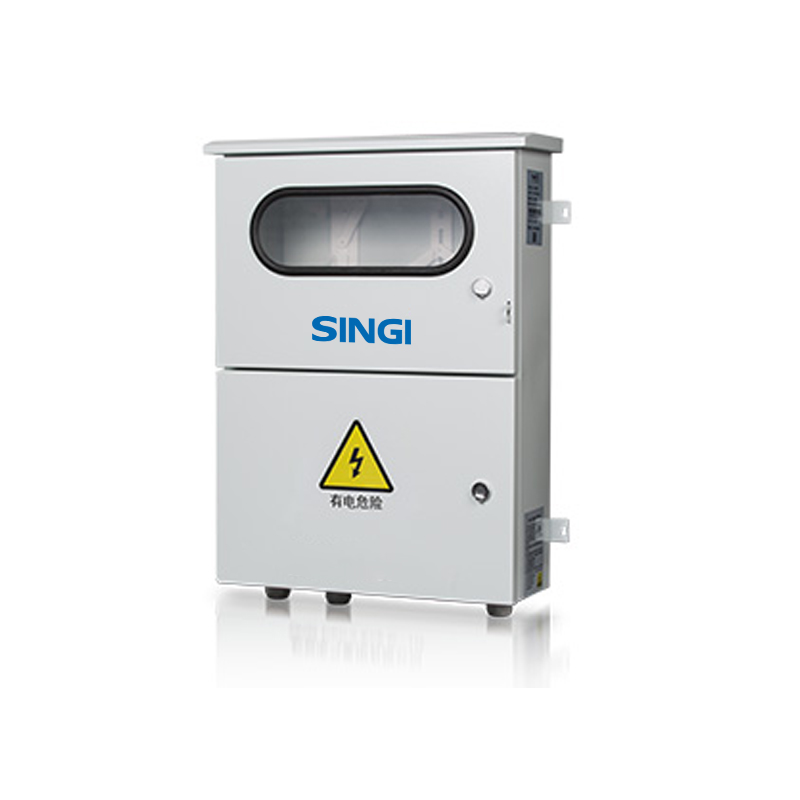
Custom cabinets offered flexibility but would take four weeks to fabricate and would cost $2,300 per inverter. Standard distribution boards were cheaper but lacked the required AC/DC segregation and would still need additional metering and surge protection components. The 10~30kW Three-Phase PV Grid-Tie Box from singielectric stood out for several reasons:
The engineering manager also liked the fact that the unit is rated for continuous 30 kW output and can support future upgrades through its spare breaker slots. The box’s IP65 enclosure would handle the humid climate of southern Vietnam with less risk of corrosion.
The installation project ran over three weekends to avoid disturbing production. The team swapped out the old switchgear for four singielectric grid-tie boxes, one per inverter. Two local electricians and a singielectric application engineer handled the work.
Key steps:
One unexpected challenge surfaced during the second weekend: the grid operator requested a visible disconnection point that could be padlocked. The standard unit did not include a lockable external handle. The singielectric team provided a retrofit handle kit, which was installed in forty minutes without re-wiring. That experience convinced the plant manager that having a manufacturer with local technical support made a real difference.
The replacement project delivered measurable benefits over the first six months of operation:
The team also reported that daily performance monitoring now works correctly. The integrated amperage transformers feed data to the same dashboard used by the plant’s maintenance staff, so they can detect underperforming strings much earlier.
“The new grid-tie box eliminated a whole layer of patchwork wiring that was a constant source of risk. What used to take two days now takes a morning, and we can see what each inverter is doing in real time,” said the plant operations manager. “I would not go back to the old arrangement, even if someone offered to build it for free.”
If the plant were to repeat this project, the team would order one spare unit for training purposes and would ask the supplier to pre-wire the metering CTs on all units to the exact plant configuration. Those small adjustments would trim another few hours off an already efficient process.
This application aligns with the following industry standards for photovoltaic grid-tie installations: