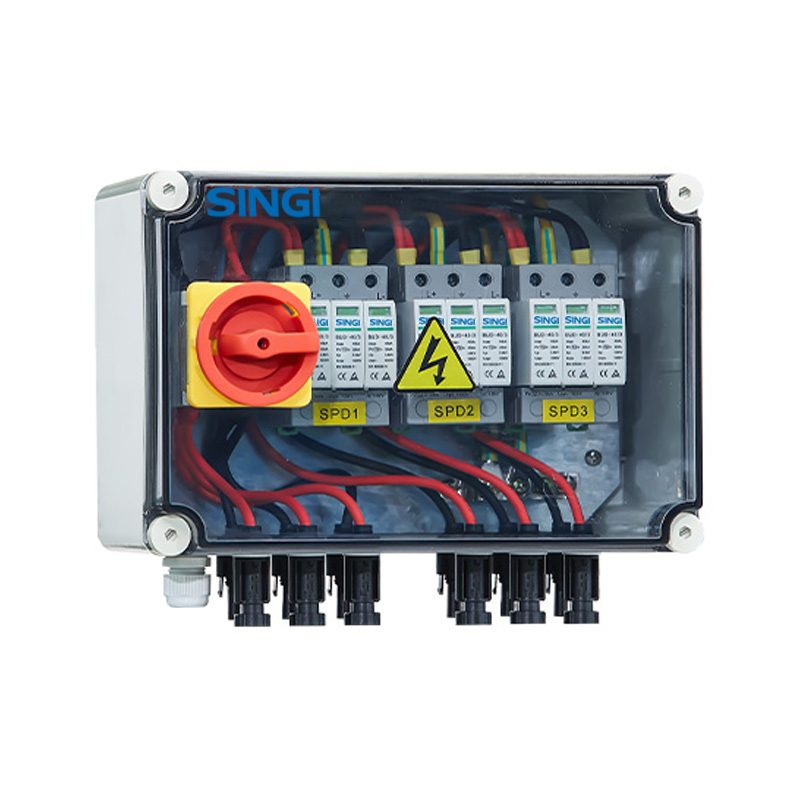
An independent power producer operates an 8 MW photovoltaic plant in Almería, Spain. The facility spans 14 hectares and contains 12,800 polycrystalline modules feeding 64 string combiner boxes. These boxes collect DC amperage from groups of modules and route it to central inverters. The plant was commissioned in 2016 and had been running at near-expected performance until 2022, when unplanned string disconnections began to appear.
During a routine thermographic inspection, the operations team found eight distribution boxes with surface temperatures above 85 °C. Door seals had dried and cracked, allowing coastal humidity and dust to enter. Inside, moisture had corroded busbars and terminals, increasing contact resistance and accelerating heating. Over the following 18 months, the plant experienced 12 unplanned string disconnections, each taking 4 to 6 hours to diagnose and reset. The annual energy yield loss reached 2.3%.
The maintenance crew opened every box once a month to wipe condensation, re-torque terminals, and reapply sealant. That routine consumed 18 minutes per box, adding up to 19 hours per month. In one incident, an arc flash tripped a string inverter and damaged a connector, raising safety concerns. The previous operator had replaced two failed boxes with a lower-cost unit from a local vendor. That product used a standard cam-lock door and its terminal block could not maintain stable contact at 1,000 V DC. Within six months, both replacements showed hot spots.
The plant's engineering team assessed three options: a generic IP65 enclosure with DIN-rail terminals, a metal-clad switchbox, and the singielectric 600V/1000V Door Clutch DC Box 3 In 3 Out (YB2-3/3). The first option offered low cost but had poor door sealing and no provision for high-volt-level DC isolation. The metal-clad switchbox was over-specified for the project and priced at 2.5 times the budget.
The YB2-3/3 stood out because of its door clutch mechanism, which applies consistent sealing pressure across the gasket and positively locks the door without over-compressing the seal. Its nameplate rating of 1000 V DC gave headroom for future string volt-level upgrades. The 3-in-3-out layout matched the plant's existing string grouping. The ingress protection rating of IP65, verified in the manufacturer's test report, addressed the coastal humidity problem. The terminal blocks included anti-loosening screws and clear polarity labels, which the installation crew noted as practical for rapid wiring.
The replacement project ran over two months. The engineering team started by auditing all 64 boxes and creating a priority list. They chosen 24 boxes with visible gasket degradation, corrosion, or terminal discoloration. Each replacement took a two-person crew four hours, including cable transfer, torque verification, and engaging the door clutch.
A typical difficulty was aligning the new DC box to the existing cable conduits. The old enclosures had slightly different knock-out positions, so the crew used a hydraulic punch to create custom openings on site. The YB2-3/3's removable mounting plate made this work manageable because cables could be connected to the plate before the box was hung.
After the first ten swaps, a thermal drone resurveyed the plant to confirm that no new hot spots had appeared. The remaining 14 replacements were completed in the following month. The project ended with a full checklist of torque values and photos taken for each box.
Twelve months after the last YB2-3/3 was installed, the plant's fault metrics showed measurable improvement:
The plant also passed an insurance inspection with no non-conformities, and the operations crew now performs thermographic scans quarterly instead of monthly.
The plant maintenance manager shared, “We needed a DC box that could survive coastal humidity and remain safe during live checks. The YB2-3/3 gave us that confidence. Our technicians no longer dread opening the doors for inspection.”
Three takeaways from this project can help other solar asset owners:
If the project were repeated, the team would order a spare YB2-3/3 unit and pre-drill all cable entries during the planning phase. That would shorten the installation time by another hour per box.
For technical verification of the enclosure and assembly requirements, the installation follows the guidelines of IEC 61439-1 for low-volt-level switchgear and controlgear assemblies. Surge protection measures, where fitted, align with IEC 61643-11 for DC photovoltaic applications. Additional safety information can be found in recent research on intelligent DC arc-fault detection methods for photovoltaic systems.