A
Parameter DC isolator Switch Traditional Solution Rated Volt-level Customizable Standard Protection Level High Medium Installation Easy Complex
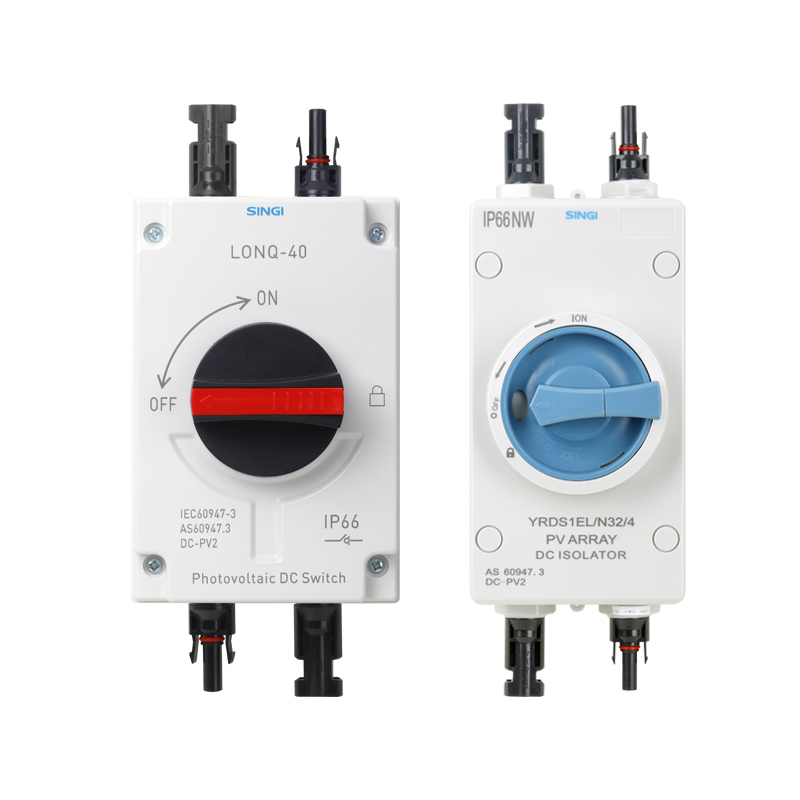
A DC isolator switch is a manually operated switching device designed to disconnect a DC circuit from its power source. It creates a visible air gap that guarantees isolation for safe maintenance. Unlike circuit breakers, isolators do not provide overamperage protection—they are strictly for disconnection. In solar PV systems, DC isolators are placed on the string side between the panels and the inverter, and on the battery side in storage systems. Their primary role is to protect personnel and equipment by ensuring a zero-energy state during work.
Any DC installation where volt-level exceeds 50 V or amperage exceeds a few amperes demands a certified isolator. Common applications include:
In each case, the DC isolator Switch must be rated for the maximum-val system volt-level and current, and it must be able to break the DC arc without damage. A proper singielectric isolator meets these demands with robust contact design and arc extinction technology.
The fundamental difference lies in arc extinction. AC systems have a natural zero-crossing point twice per cycle, allowing arcs to self-extinguish. DC arcs have no such zero-crossing—they must be stretched, cooled, and quenched mechanically. A DC isolator switch therefore uses wider contact gaps, blow-out magnets or arc chutes with specific materials. Using an AC-rated switch on a DC circuit can lead to sustained arcing, contact welding, and fire. Engineers must never substitute AC isolators for DC applications.
When choosing a DC isolator Switch, verify these parameters against your system design:
The singielectric range of DC isolators offers ratings from 16A to 63A and volt-levels up to 1500 Vdc, with IP66 enclosures for harsh environments.
Note: Always choose a switch that can safely break the rated amperage under load. Not all isolators are designed for load breaking—confirm manufacturer specifications.
DC isolators must comply with international standards to ensure safe operation. The relevant references include:
Products from singielectric are designed and tested in accordance with these standards, ensuring reliability in demanding DC environments.
Common errors include undersizing the switch, using AC-rated devices, or omitting isolation on the battery side. To avoid these:
For a reliable solution, the DC isolator Switch from singielectric offers a proven design with high short-circuit withstand and arc extinguishing capability.
No. AC isolators rely on zero-crossing for arc extinction. DC arcs are continuous and will cause severe damage unless the switch is explicitly designed for DC.
A DC isolator provides a visible air gap for safe disconnection but does not offer overamperage protection. A DC circuit breaker combines isolation with protection against overloads and short circuits.
Annually, or following a fault event. Check for signs of arcing, overheating, mechanical wear, and ensure the contacts are clean and tight.
For your next solar or DC power project, choose a reliable DC isolator Switch that meets international standards. View the full specifications and order from singielectric at singielectric.com/products/dcisolatingswitch.