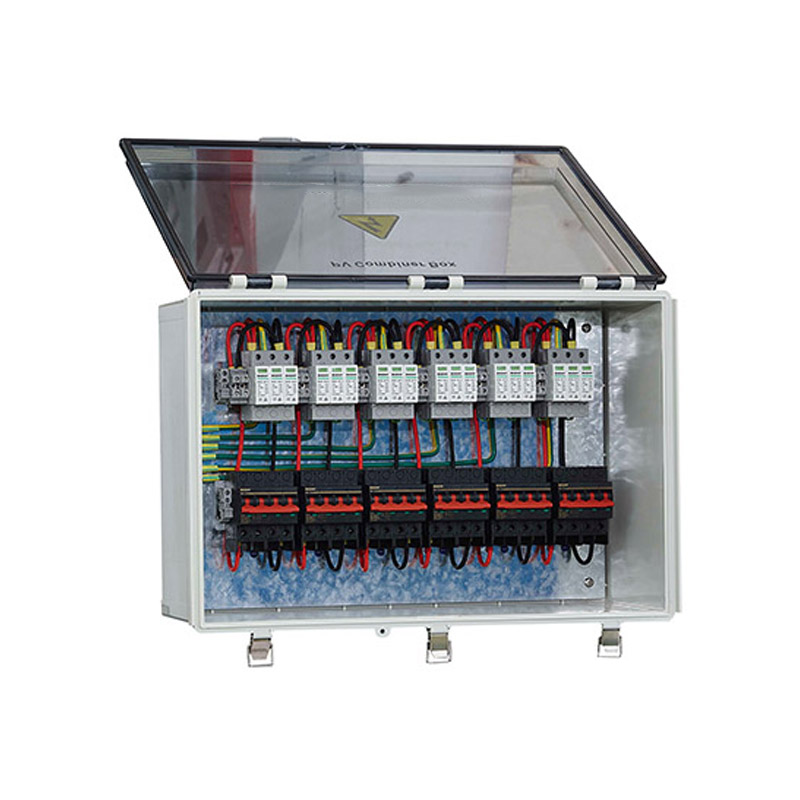
| Parameter | 1000V DC COMBINER BOX 6 IN 6 OUT YBS-6/6 | Traditional Solution |
|---|---|---|
| Rated Voltage | Customizable | Standard |
| Protection Level | High | Medium |
| Installation | Easy | Complex |
A 1000V DC combiner box is a centralized enclosure that aggregates the output of multiple photovoltaic (PV) strings into a single DC bus. In large-scale solar installations, system voltage is a critical design parameter. Higher voltage reduces current for the same power, lowering resistive losses and allowing smaller cable sizes. The 1000V rating is common in commercial and industrial PV systems, balancing efficiency with component availability. Singielectric's YBS-6/6 model is rated for 1000V DC and accepts 6 inputs, outputting 6 combined strings — making it suitable for arrays with up to 6 sub-arrays or inverters.
The DC combiner box also houses overcurrent protection devices (fuses or breakers), surge protective devices (SPDs), and sometimes monitoring equipment. By grouping strings, it reduces the number of home runs to the inverter and simplifies wiring. For 1000V systems, the combiner box must comply with IEC 60947-1 and relevant PV standards to ensure safe interruption under fault conditions.
The 6-in 6-out configuration means the box combines 6 PV strings into 6 output circuits. This is useful when the inverter has multiple MPPT inputs or when strings are grouped by orientation or shading conditions. Unlike a typical combiner that merges all strings into one output, the 6-out design allows each string to be individually routed to separate inverter channels or sub-arrays. This provides flexibility in string sizing and fault isolation.
For example, if one string develops a ground fault, only that output is affected, while other strings continue delivering power. Singielectric's 1000V DC combiner box 6 in 6 out offers this isolation without requiring additional junction boxes. It simplifies maintenance and troubleshooting. This configuration is popular in systems where string-level monitoring is required or where modules face different directions.
A properly designed DC combiner box enhances both safety and operational efficiency. Safety-wise, it contains fuses or circuit breakers that protect against reverse current and overcurrent faults. In a 1000V system, arc flash energy is significant, so using a combiner box with IP65 or higher ingress protection and proper arc mitigation is essential. Singielectric's YBS-6/6 includes surge protection devices (Type 2 SPDs) to shield equipment from lightning-induced transients.
Efficiency improvements come from reduced voltage drop and centralized monitoring. With 6 inputs and 6 outputs, the combiner box minimizes the number of cable runs to the inverter, lowering installation costs. The box also allows rapid disconnection for maintenance. Compliance with IEC 62548 (PV array design) ensures that the combiner box meets international standards for string combining and overcurrent protection.
When choosing a 1000V DC combiner box for your solar project, consider the following parameters:
Singielectric offers detailed datasheets for their DC combiner boxes. Always cross-check with your inverter's specifications to ensure compatibility.
Installation should follow the manufacturer's manual and local electrical codes. Mount the box near the PV array to keep string lengths short. Use appropriate DC-rated cables and connectors. Label all strings and outputs . Connect the combiner box to the inverter using properly sized DC cables. Test all protection devices before commissioning.
Maintenance involves periodic inspection of fuses, SPD status indicators, and enclosure seals. Check for corrosion, loose connections, and moisture ingress. For 1000V systems, always use insulated tools and follow lockout/tagout procedures. Singielectric's combiner boxes are designed for minimal maintenance, but annual checks are recommended.
A 6-in 1-out combines all strings into one output, while a 6-in 6-out maintains separate outputs for each string. The latter provides better fault isolation and is ideal for multi-MPPT inverters.
No. The box is rated for 1000V maximum. Using it in a 1500V system would violate safety standards and void warranties. Always match the voltage rating precisely.
Fuses are cost-effective and reliable for string protection. Breakers offer the convenience of resettable protection and visible isolation. Singielectric's YBS-6/6 supports both options depending on configuration.
While not always mandatory, it is recommended. Surge protection devices (SPDs) prevent damage from lightning and switching transients. Many codes require SPDs for commercial PV systems.
Yes, Singielectric offers OEM/ODM services for DC combiner boxes. Contact their sales team for custom input/output counts, voltage ratings, and enclosure options.
For reliable 1000V DC combiner boxes designed for 6-string configurations, explore the YBS-6/6 by Singielectric. Engineered for safety and performance, it meets international standards and supports your PV system's efficiency.