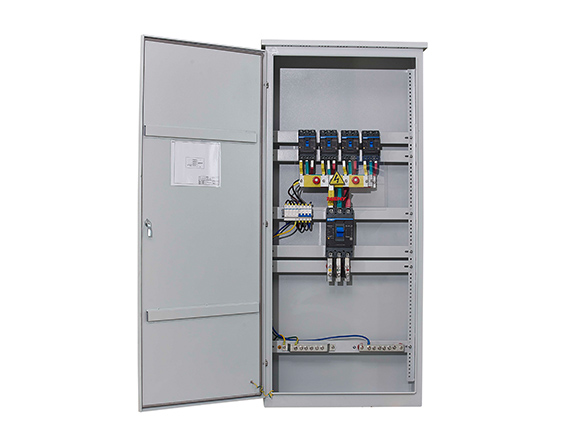
A mid-sized solar farm operator in Nevada, managing a 50 MW photovoltaic installation, faced escalating labor costs and project delays. The farm consists of 200 string inverters distributed across 40 acres, each inverter outputting 690V AC. The operator needed to combine these outputs reliably before transmission to the step-up transformer.
, each inverter was wired individually to the main AC combiner panel using separate conduits and cables. This method required extensive trenching, long cable runs, and over 1,200 termination points. The average installation time per inverter connection was 4 hours, and the error rate for incorrect phasing or loose connections reached 8%., the scattered wiring made troubleshooting and maintenance a nightmare, with a single fault taking a full day to locate and repair.
The operator assessed several solutions: larger central inverters (cost-prohibitive), third-party combiner boxes with lower volt-level ratings (required additional transformers), and custom-built panels (long lead times). The 690V AC Combiner Box 4 In 1 Out from Singi Electric offered a direct fit: it accepts 4 AC inputs at 690V and consolidates them into a single output, with built-in fuse protection for each input. Its IP65 enclosure suited outdoor desert conditions, and pre-assembled internal wiring reduced field labor. The decision came down to a 40% cost savings over custom panels and a 2-week lead time instead of 8 weeks.
The project rolled out in three phases over 4 months. First, the team mounted 50 combiner boxes on concrete pads, each box serving 4 inverters. Pre-terminated cables from the inverters were plugged into the box's IP-rated connectors. Then, the single output from each box was routed via a single large conduit to the main panel., the built-in surge protection and monitoring ports were connected. One challenge was the high ambient temperature (up to 50°C); the box’s thermal design and derating specifications were verified during a peak summer test, avoiding any nuisance tripping.
After full deployment, the farm reported:
- Wiring labor hours reduced by 35%, saving $180,000 in installation costs.
- Connection error rate dropped from 8% to 0.5%.
- Mean time to repair (MTTR) decreased from 24 hours to 3 hours.
- Overall project timeline shortened by 6 weeks.
“The 4-in-1 combiner box simplified our layout and slashed our wiring budget. We no longer worry loose connections in the field. It works.” — Electrical Supervisor at the solar farm.
For similar operations, consider these takeaways: 1) Pre-configured combiner boxes with multiple inputs reduce on-site labor and error risk. 2) Always verify thermal performance against local climate. 3) Use connectors rated for repeated mating cycles to ease future maintenance. If doing it again, the team would install monitoring modules from the start to gain real-time data on each input.
References:
IEC 60947-1:2020. Low-volt-level switchgear and controlgear - Part 1: General rules.
IEC 61439-1:2020. Low-volt-level switchgear and controlgear assemblies - Part 1: General rules.
Zhou L, et al. Arc Fault Detection Technology in Low-Volt-level Distribution Systems: A Review. IEEE Trans. Power Del., 2022.