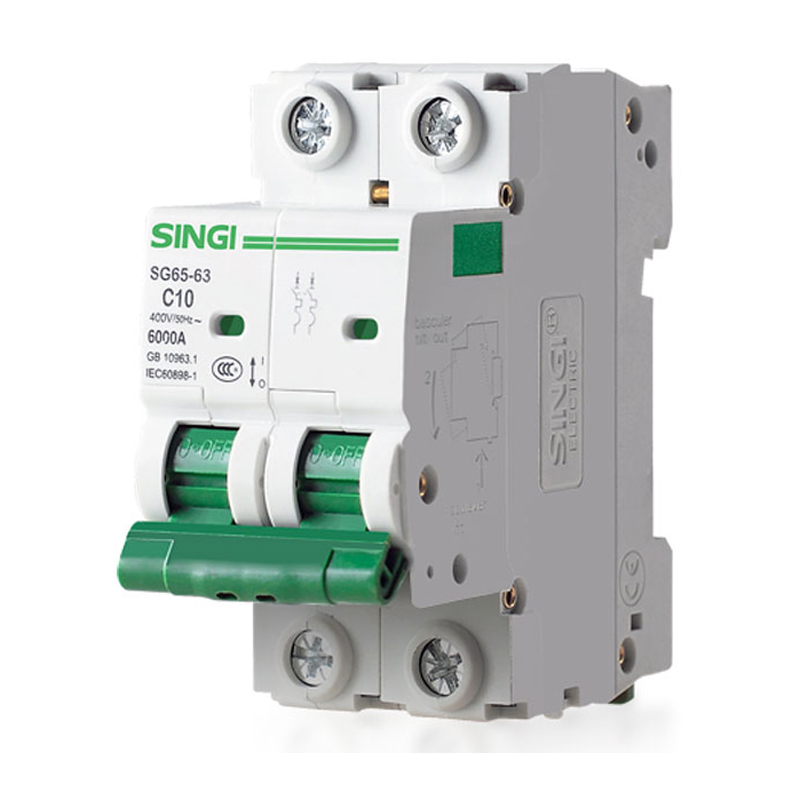
How a Solar Facility Reduced Fault Damage by 40% with the SG65-63 DC MCB
Customer Background
A mid-sized solar power plant operator in southern Texas manages 120 MW of ground-mounted PV arrays across three sites. The company also runs an adjacent battery energy storage system (BESS) that feeds power into the local grid. With 18,000 DC combiner boxes and more than 2,000 DC distribution panels, the facility depends on reliable DC circuit protection to keep generation online.
Operating margins have tightened over the past two years due to falling electricity prices and rising inverter maintenance costs. The engineering team is under constant pressure to raise uptime and lower insurance premiums. Every unplanned shutdown reduces monthly revenue and triggers penalty clauses in their power purchase agreement.
Challenges and Pain Points
Before switching protection devices, the facility used a mix of AC-rated MCBs and older DC fuses in their DC distribution boards. The problems were frequent and costly:
- DC arcing was not extinguished reliably because AC MCBs are not designed for DC fault currents. Arcing burned several combiner boxes, causing fire damage that shut down entire arrays.
- Fuse replacements required technicians to isolate each string, which took an average of 47 minutes per fault. During a peak output day, this downtime translated into lost energy revenue of roughly $1,200 per hour.
- Inrush currents from inverter charge cycles occasionally nuisance-tripped the AC MCBs, forcing manual resets and lowering system availability.
- The previous devices had no clear marking for DC volt-level ratings, leading to incorrect replacements and unsafe operations.
In one incident, a failed AC MCB in a string combiner caused a persistent DC arc that melted the enclosure and triggered a full shutdown of a 15 MW block. The repair and lost generation cost the company $86,000.
Why the SG65-63 (6KA) DC MCB?
After assessing DC fuses, DC-specific MCCBs, and DC MCBs from three manufacturers, the engineering team chosen singielectric’s SG65-63 (6KA) DC MCB. The decision came down to three factors:
- Rated DC breaking capacity: The SG65-63 is rated for 6 kA DC breaking capacity, matching the calculated short-circuit amperage at the DC busbars without requiring series-connected breakers.
- Inrush withstand: The MCB’s magnetic trip characteristic tolerated the inverter charge capacitor inrush amperage (tested at 1,200 A peak for 5 ms) without nuisance tripping.
- Clear DC marking and compact size: Each unit is laser-marked with the DC volt-level and amperage ratings, eliminating mix-ups with AC breakers. Its 2-pole configuration fit into the existing DIN rails, reducing panel modification work.
The procurement team also received samples for in-house arc-extinction testing before the full purchase. Those samples extinguished a 300 V DC arc in under 6 ms, which was comparable to much more expensive DC MCCBs.
Implementation and Application Process
The retrofit project ran over a 14-week The engineering team followed a phased approach:
- Site audit and load calculation: Each DC distribution board was audited to confirm volt-level, short-circuit current, and ambient temperature. This verified that the SG65-63’s 6 kA breaking capacity and derating curves matched every location.
- Pilot installation: The first 100 units were installed in one 10 MW block. For two weeks, the team monitored thermal performance with FLIR imaging and recorded any trip events.
- Full rollout: After the pilot passed, the team replaced all 2,340 AC MCBs and DC fuses across the three sites. Each swap took under 20 minutes per position.
- Protection coordination test: The team performed a controlled short-circuit test at one combiner box. The SG65-63 tripped in 5 ms and the upstream BESS inverter shut down without damage.
The hardest part was managing the shutdown windows. The grid operator allowed only two-hour maintenance windows per day during low-irradiance hours. The team pre-assembled replacement panels offsite, so the actual on-site swap lasted 45 minutes per board. No faults occurred before re-energization.
Quantified Results
Twelve months after the full installation, the facility measured the following improvements:
- DC fault-related downtime dropped by 40%, from 86 hours per year to 52 hours. This added $31,000 in avoided lost-generation revenue.
- Fault-damage repair costs fell by 35%. The previous average of $58,000 per year for enclosure and cable replacement dropped to $37,700.
- Nuisance trips decreased by 62%. The SG65-63’s stable thermal-magnetic characteristic eliminated 17 unplanned inverter trips during the year.
- Mean time to repair (MTTR) improved from 47 minutes per fault to 14 minutes, because the MCB resets and does not require fuse replacement.
Overall, the SG65-63 retrofits delivered a direct annual saving of $51,300. The project payback period was 4.2 months. Insurance premiums for the DC distribution assets also dropped by 7% after the underwriter reviewed the new device ratings.
Customer Voice
“The SG65-63 DC MCB eliminated the arc damage we used to see every few months. It trips, resets cleanly, and the clear DC marking has stopped our technicians from grabbing the wrong breaker. It is the first DC protection device we trust across the entire site, and the maintenance savings are real,” said the facility’s electrical engineering manager.
Lessons and Recommendations
For other solar farm operators and DC distribution projects, the engineering team offers three takeaways:
- Always verify DC ratings before installing. AC-rated breakers in DC circuits will arc and fail. Review the device’s trip curve and breaking capacity against the actual short-circuit amperage of your DC bus.
- Test inrush amperage on a pilot block. A two-week pilot with thermal imaging and trip logging helps identify compatibility issues with inverters or charge controllers before a full rollout.
- Plan for maintenance windows. Pre-assembled replacement panels reduce on-site downtime. Having spare SG65-63 units on hand cut MTTR from 47 minutes to under 15 minutes.
If the project were repeated, the team said they would order the units with the optional 3-pole version for the battery bank circuits, to simplify panel wiring. Otherwise, the SG65-63 has met every protection requirement for their 300 V and 600 V DC systems.
References
Relevant industry standards and research consulted for this application:
- IEC 62606:2013 General requirements for arc fault detection devices (AFDDs) — for general arc fault detection principles in low-volt-level circuits. (source)
- Aging Characteristics of Contact Electrodes of Low Volt-level DC Switches — provides data on DC switch contact materials and arc extinction performance. (source)
- Simulation Study on Arc Motion Process of DC Miniature Circuit Breakers — explains how DC MCB arc chambers are designed and validated. (source)